How It Works
A Clearer Path From Potential to Progress
The Talent Journey is six intentional steps. Each one is designed to reduce guesswork for talent and families.
The Talent Journey
Six steps, start to growth
Every family moves through the same clear sequence, at a pace that fits the talent.
Step 1: Get Scouted or Submit
Some families arrive with a scouting invitation and a referral code. Others come to us independently through the application. Both pathways are welcome, and both begin with a conversation rather than a commitment.
Step 2: Complete a Discovery Consultation
We meet with the talent and their parent or guardian to understand interests, availability, comfort level, and goals. This is also where families ask questions and learn how our development process actually works.
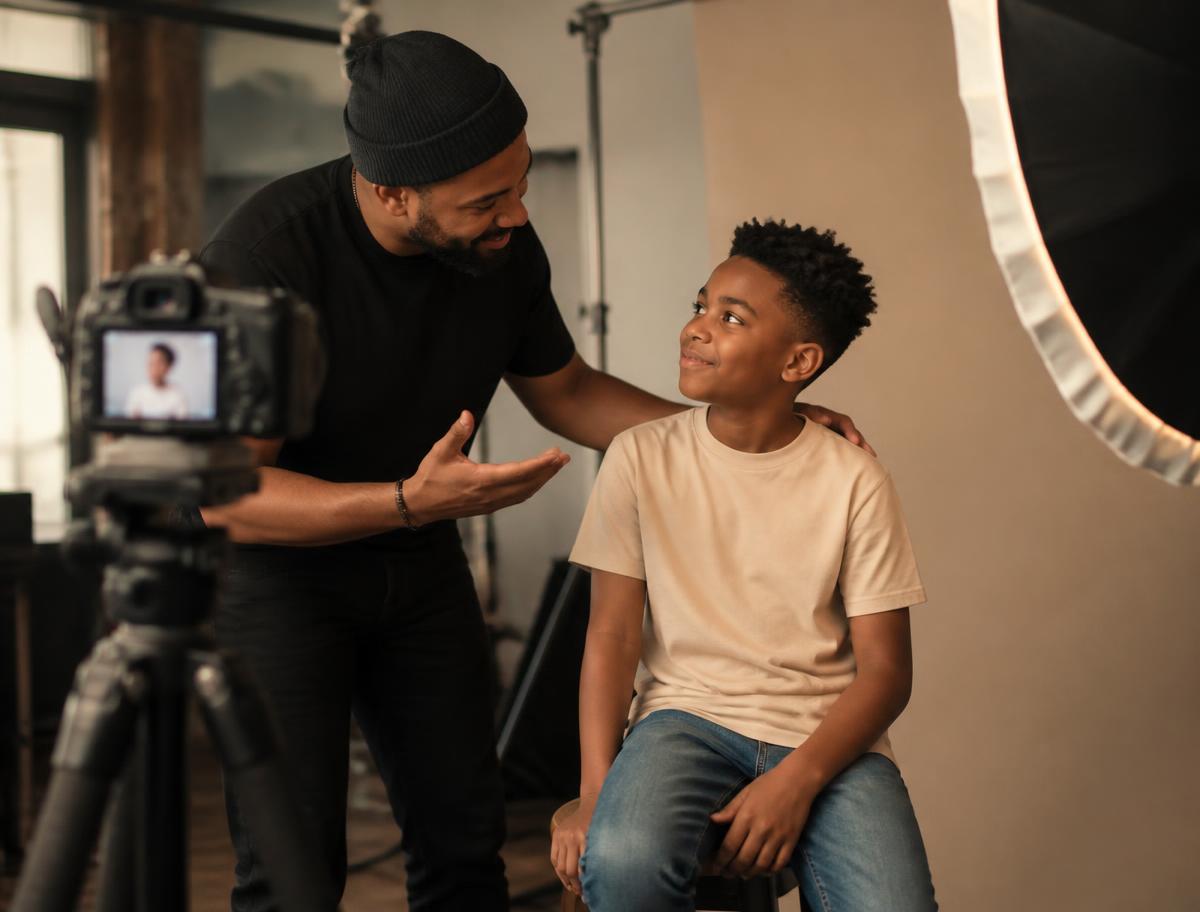
Step 3: Attend a Test Shoot Session
Depending on interests, the session may include photography, on-camera video, voice recording, or a short monologue presentation. The goal is observation and encouragement, not judgment.
Step 4: Receive a Personalized Talent Blueprint
The Blueprint documents what we observed, the strengths worth leaning into, the areas worth developing, and a recommended pathway. It is guidance for growth, not a guarantee of representation or employment.
Step 5: Begin the Recommended Development Pathway
Every participant begins with tAE Base Training and then continues into the level recommended in their Blueprint, with training that fits their age, interests, and schedule.
Step 6: Practice, Grow, and Participate in Showcases
Talent keeps practicing with structured assignments and coaching feedback, then demonstrates progress through quarterly showcases and community experiences.
Step 3 in Focus
The Test Shoot Session
A guided, low-pressure session that shows us how a young creative works with direction. It is observation and encouragement, not a competition.
Photography
Posing, expression, and camera comfort.
On-camera video
Slating, direction-following, and presence.
Voice recording
Clarity, pacing, and mic technique.
Monologue presentation
Memory, delivery, and interpretation.
The session format depends on the participant's interests. Not every talent does every format.
Step 4 in Focus
The Personalized Talent Blueprint
After the test shoot, families receive a written Blueprint that turns observations into a plan.
Observations
What we noticed about strengths, comfort, and range.
Development areas
Specific skills worth building next.
Recommended next steps
The pathway and practice that fit right now.
The Talent Blueprint is guidance for development. It is not a guarantee of representation, employment, bookings, or industry success, and it does not replace decisions made by families.

Start with a conversation, not a commitment
Scouted talent continue their invitation. Everyone else submits an application for review. Both paths lead to a Discovery Consultation.